
Key Takeaways
Critical Structural and Safety Modifications
Bathroom Safety Enhancements
Smart Home Technology Integration
Financial Assistance and Professional Support
Medically Reviewed
This content has been reviewed for medical accuracy by a board-certified physician

Medical Director & Physician
MD, Board Certified in Internal Medicine & Geriatrics
Our Commitment to Accuracy: All medical content is reviewed by licensed healthcare professionals to ensure accuracy and alignment with current medical knowledge and practice standards.
Aging in place home modifications enable over 77% of Americans aged 50 and older to achieve their goal of remaining in their own homes as they age. Strategic improvements addressing age-related physical changes—reduced strength, balance challenges, and mobility limitations—create safer, more accessible living environments that preserve independence and dignity while reducing injury risks and the need for institutional care.
Critical Structural and Safety Modifications
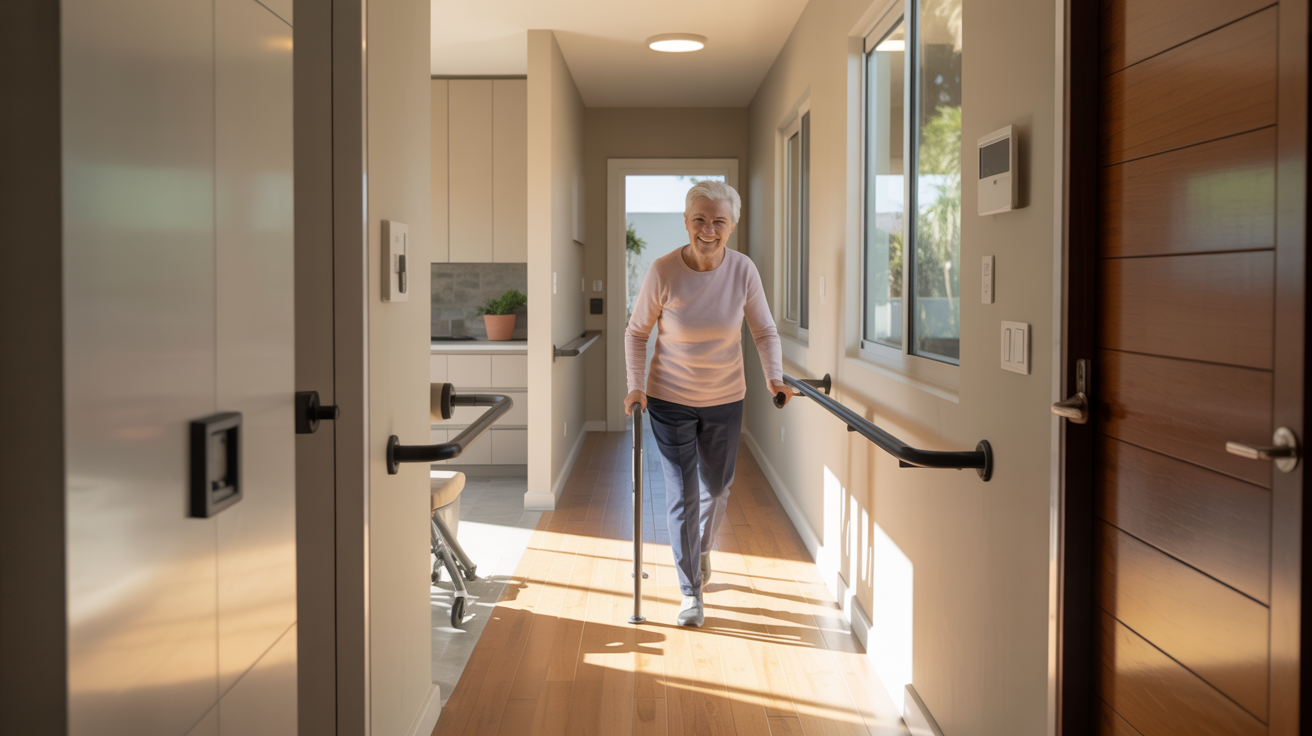
Foundation modifications focus on preventing falls, the leading cause of injury among seniors. Install sturdy handrails on both sides of all staircases and along hallways for continuous support. Add ramps at entrances to eliminate steps for wheelchair users or those with limited mobility. Replace hazardous flooring like cracked tiles or worn carpet with slip-resistant materials such as rubber or cork, and secure all carpets with nonskid backing. Widen doorways to accommodate walkers and wheelchairs, ensuring clear pathways throughout the home. Replace traditional round doorknobs with lever-style handles that require less grip strength and dexterity. Install motion-sensor lighting along outdoor pathways, stairs, and entrances to improve visibility and prevent nighttime falls. Repair uneven outdoor surfaces including cracked steps, driveways, and walkways.
Bathroom Safety Enhancements
Bathrooms present the highest fall risk due to wet surfaces and hard fixtures. Essential modifications include installing grab bars near toilets, sinks, and inside showers or tubs to provide stable support points. Add shower benches or chairs for safe seated bathing, reducing the need to stand on slippery surfaces. Apply non-slip decals to tub and shower floors. Consider walk-in tubs or curbless showers that eliminate the need to step over high barriers, with some models offering therapeutic hydrotherapy features. Install raised toilet seats to make sitting and standing easier for those with mobility limitations. Replace traditional faucets with single-lever models that are easier to operate and help prevent scalding by simplifying temperature control.
Smart Home Technology Integration
Modern smart home devices significantly enhance safety and convenience for aging in place. Smart home systems allow voice or remote control of lights, locks, thermostats, and appliances, reducing the need for physical movement. Medical alert systems with automatic fall detection and GPS tracking provide immediate emergency access. Smart doorbells and cameras let seniors see and communicate with visitors without opening doors. Voice-activated smart speakers control home functions and provide medication reminders. Smart pill dispensers automate medication schedules, preventing missed or double doses. Motion-activated lighting prevents falls during nighttime bathroom trips. Smart thermostats maintain comfortable temperatures remotely, protecting against heat or cold-related health issues. Health monitoring devices track vital signs and alert caregivers to potential problems.
Financial Assistance and Professional Support
While some modifications are inexpensive DIY projects, others require professional installation and significant investment. Medicare Advantage plans may cover certain modifications like walk-in showers and medical alert systems. The U.S. Department of Agriculture offers grants and low-interest loans for home modifications. State Medicaid waiver programs assist eligible seniors. Tax deductions may be available for medically necessary modifications. Health Savings Accounts and Flexible Spending Accounts can pay for medical alert and monitoring systems with pre-tax dollars. Always hire licensed professionals for complex projects involving building codes or electrical work. All Seniors Foundation provides home safety assessments and connects families with Certified Aging in Place Specialists (CAPS) who understand the specific needs of older adults and can design comprehensive modification solutions that support safe, independent living at home.
Ready to Get Started with Home Health Care?
Schedule a free assessment with our expert care team. We'll help you understand your options and create a personalized care plan.
Or call us at (818) 581-4101