
Key Takeaways
Indoor Fall Prevention Strategies
Bathroom and Stairway Safety
Outdoor Winter Safety Measures
Proper Winter Attire
Support from All Seniors Foundation
Medically Reviewed
This content has been reviewed for medical accuracy by a board-certified physician

Medical Director & Physician
MD, Board Certified in Internal Medicine & Geriatrics
Our Commitment to Accuracy: All medical content is reviewed by licensed healthcare professionals to ensure accuracy and alignment with current medical knowledge and practice standards.
Preventing winter falls elderly is a critical priority as ice and snow create hazardous conditions that significantly increase injury risk. Falls are the leading cause of injury among seniors, and winter weather compounds these dangers with slippery surfaces both indoors and outdoors. Taking proactive safety measures can help you or your loved one stay safe throughout the cold season.
Indoor Fall Prevention Strategies
Winter fall prevention starts inside your home. Maintain indoor temperatures at a minimum of 68°F, as cold muscles and joints increase fall risk. Remove tripping hazards like loose rugs, electrical cords, and clutter from walkways. Install adequate lighting in all areas, especially hallways, staircases, and bathrooms. Consider motion-activated night lights for safe nighttime navigation.
Bathroom and Stairway Safety
Install grab bars in bathrooms near toilets and in showers or tubs. Use non-slip mats in bathing areas and ensure bathroom floors stay dry. For staircases, ensure handrails are secure on both sides and keep stairs well-lit and clear of items. Mark the edge of steps with contrasting tape to improve visibility.
Outdoor Winter Safety Measures
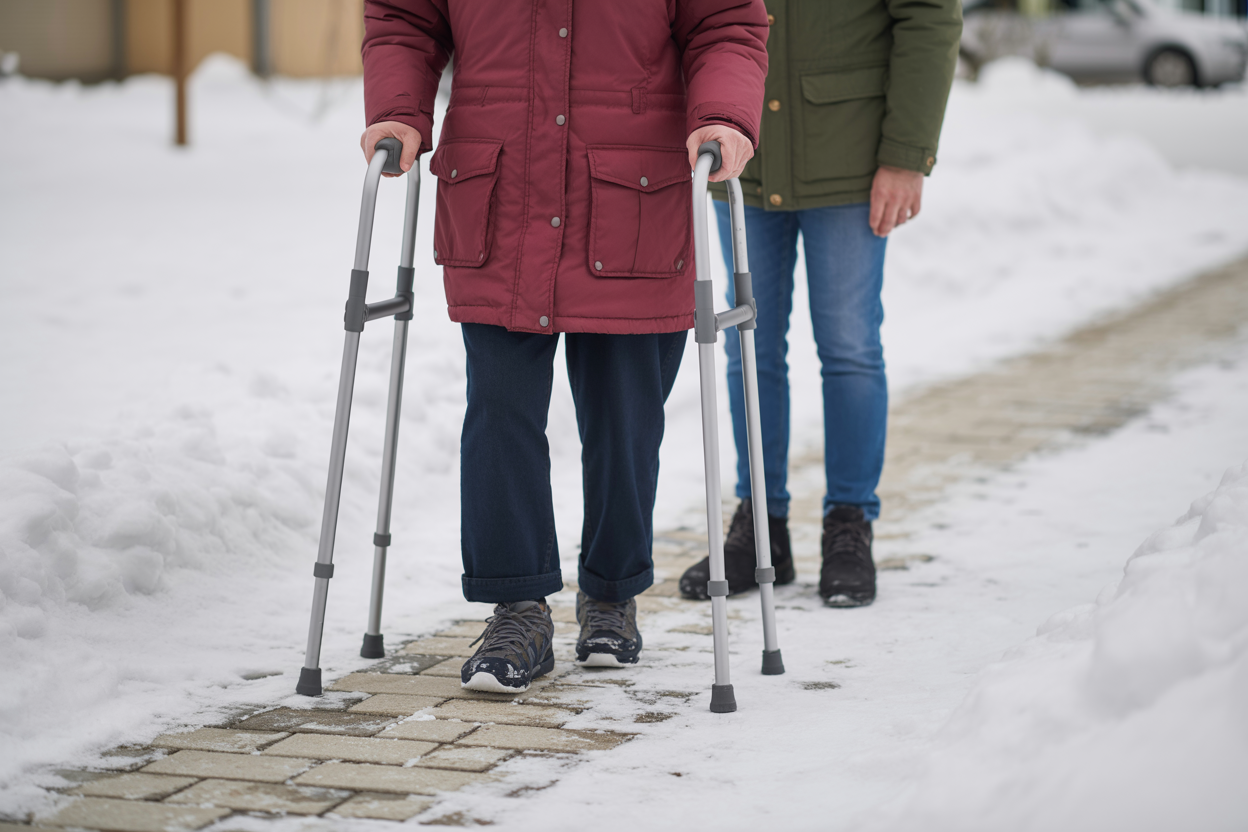
When venturing outside, wear non-skid, rubber-soled, low-heeled footwear with good tread. Avoid going out during extremely cold, windy, or icy conditions when possible. Keep outdoor walkways clear of snow and ice using ice melt or sand. If you use a cane, replace worn rubber tips and consider ice-pick attachments for added traction on slippery surfaces.
Proper Winter Attire
Dress in layers with a waterproof outer coat or jacket. Wear a hat, scarf, and gloves or mittens to maintain body warmth, which helps keep muscles flexible and responsive. Consider hand and foot warmers for extended outdoor exposure. Avoid carrying heavy bags that can affect your balance.
Support from All Seniors Foundation
All Seniors Foundation offers home safety assessments and can connect you with services to help maintain safe walkways and provide assistance during winter months. Our caregivers can accompany seniors on necessary outings and help with tasks that might increase fall risk during winter weather.
Staying Active and Strong
Maintain physical strength through indoor exercises like chair yoga, walking routines, or light strength training. Regular activity improves balance, flexibility, and muscle strength—all crucial for preventing winter falls elderly. Consult with your healthcare provider about appropriate exercise programs and balance training.
By implementing these comprehensive safety strategies, seniors can significantly reduce their risk of winter falls and enjoy the season with greater confidence and security. Remember that preventing winter falls elderly requires ongoing attention and adaptation to changing conditions throughout the winter months.
Ready to Get Started with Home Health Care?
Schedule a free assessment with our expert care team. We'll help you understand your options and create a personalized care plan.
Or call us at (818) 581-4101