
Key Takeaways
Why Winter Increases Fall Risk
Proper Winter Footwear and Walking Techniques
Home Safety Modifications for Winter
Health and Fitness Preparation
Emergency Preparedness
Medically Reviewed
This content has been reviewed for medical accuracy by a board-certified physician

Medical Director & Physician
MD, Board Certified in Internal Medicine & Geriatrics
Our Commitment to Accuracy: All medical content is reviewed by licensed healthcare professionals to ensure accuracy and alignment with current medical knowledge and practice standards.
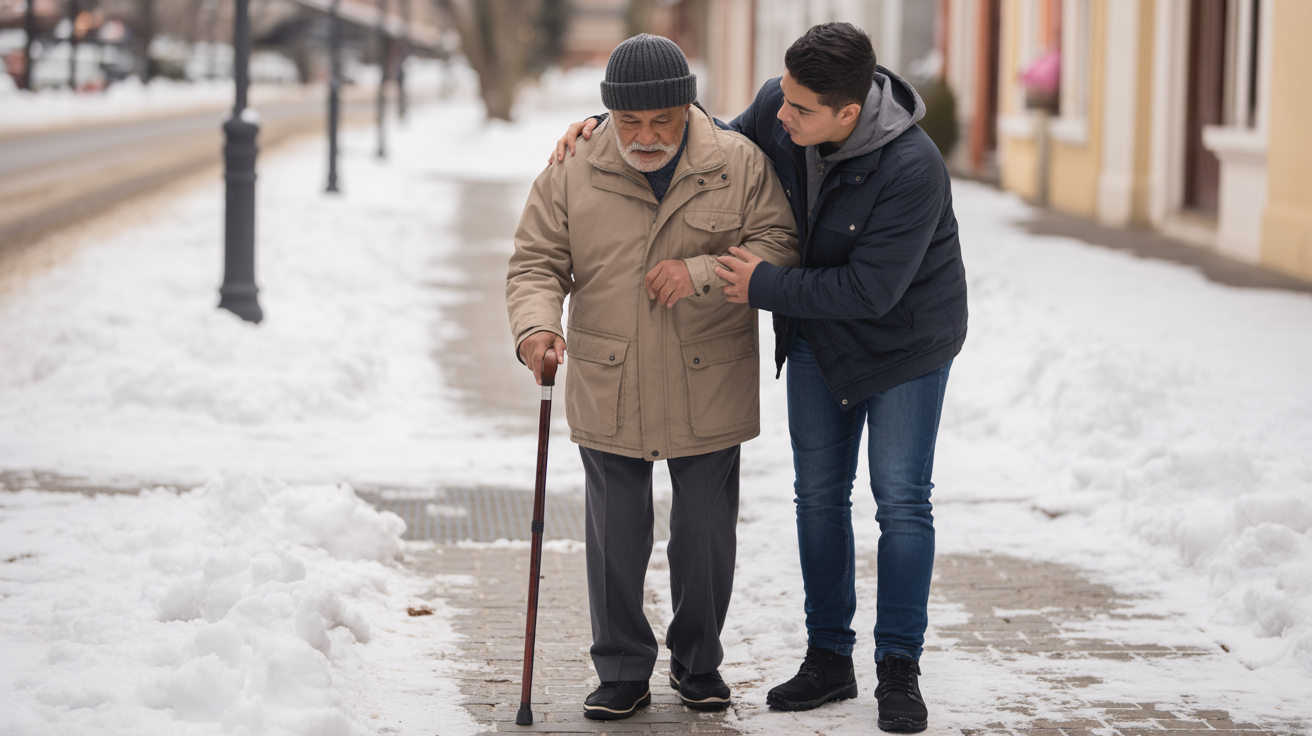
Winter weather creates serious fall hazards for seniors, with icy sidewalks, snowy driveways, and slippery surfaces increasing injury risk dramatically. Falls are the leading cause of injury-related deaths among older adults, with more than one in four seniors falling each year. Understanding winter fall prevention seniors strategies is crucial for maintaining independence and safety during the cold months ahead.
Why Winter Increases Fall Risk
Cold weather affects seniors in multiple ways that increase fall danger. Icy and snowy surfaces create obvious slipping hazards, but physiological changes matter too. Cold temperatures cause muscles and joints to stiffen, reducing flexibility and balance. Many seniors experience decreased sensation in their feet due to conditions like diabetes or poor circulation, making it harder to detect unstable surfaces. Medications can cause dizziness or drowsiness, further elevating risk. All Seniors Foundation provides comprehensive safety assessments to identify and address individual fall risk factors.
Proper Winter Footwear and Walking Techniques
The right footwear is your first line of defense against winter falls. Choose boots with thick, rubber, non-skid soles featuring zigzag or wave-like tread patterns for maximum traction. Boots should provide ankle support, have low heels, and fit properly with room for warm socks without restricting circulation. Consider adding spikeless ice gripper sole covers for extra stability on particularly icy days.
Walking technique matters as much as footwear. Take short steps with feet pointed slightly outward—the "penguin walk"—and shuffle when necessary. Keep your hands out of pockets for better balance. Walk slowly and deliberately, scanning ahead for potential hazards. Stay on cleared paths, use handrails when available, and avoid carrying items while walking on icy surfaces. Watch especially for black ice in shaded areas.
Home Safety Modifications for Winter
Preventing falls starts at home with proper preparation:
- Clear driveways and sidewalks of snow and ice promptly, or arrange for help from family, neighbors, or professional services
- Sprinkle cat litter on slick surfaces for immediate traction
- Install motion-sensor lights in outdoor areas like driveways and walkways
- Place non-slip mats by all entrances that may get wet from snow
- Add handrails or grab bars by outdoor steps and slippery areas
- Keep a small bag of lightweight cat litter near the door to carry when going out
Health and Fitness Preparation
Physical preparation significantly reduces fall risk. Maintain regular exercise year-round, focusing on balance, strength, and flexibility. Simple exercises like standing on one leg while holding support, knee bends, or marching in place build crucial stability muscles. Research shows balance exercises can reduce fall risk by 24%. Consult your doctor about medications that might affect balance, and schedule regular vision and hearing checks. Dress warmly even for brief outdoor trips to prevent hypothermia, which can impair judgment and coordination.
Emergency Preparedness
Despite precautions, falls can happen. Always carry a cell phone or wear a medical alert device with automatic fall detection and GPS tracking. If you fall, stay calm, assess for injuries, and call for help if needed. Try to get up slowly by rolling to your side, moving to hands and knees, and using a sturdy object for support. Even if you feel fine after a fall, contact your doctor—some injuries aren't immediately apparent. All Seniors Foundation offers home health services including physical therapy to help seniors recover from falls and prevent future incidents.
Winter doesn't have to mean isolation or fear. With proper preparation, appropriate footwear, home modifications, and awareness of your limitations, you can stay safe and active throughout the cold months. Know when to ask for help, whether it's shoveling snow, running errands, or simply having someone check on you during severe weather.
Ready to Get Started with Home Health Care?
Schedule a free assessment with our expert care team. We'll help you understand your options and create a personalized care plan.
Or call us at (818) 581-4101