
Key Takeaways
Preventing Falls on Ice and Snow
Recognizing and Preventing Hypothermia
Managing Seasonal Health Risks
Staying Active and Connected
Emergency Preparedness
Medically Reviewed
This content has been reviewed for medical accuracy by a board-certified physician

Medical Director & Physician
MD, Board Certified in Internal Medicine & Geriatrics
Our Commitment to Accuracy: All medical content is reviewed by licensed healthcare professionals to ensure accuracy and alignment with current medical knowledge and practice standards.
Winter presents unique health challenges for seniors, who face heightened risks of falls, hypothermia, and illness during colder months. Winter safety seniors must prioritize includes understanding these risks and implementing preventive measures. Older adults lose heat more quickly due to slower circulation, lower body fat, and pre-existing health conditions, making winter preparation essential for wellbeing.
Preventing Falls on Ice and Snow
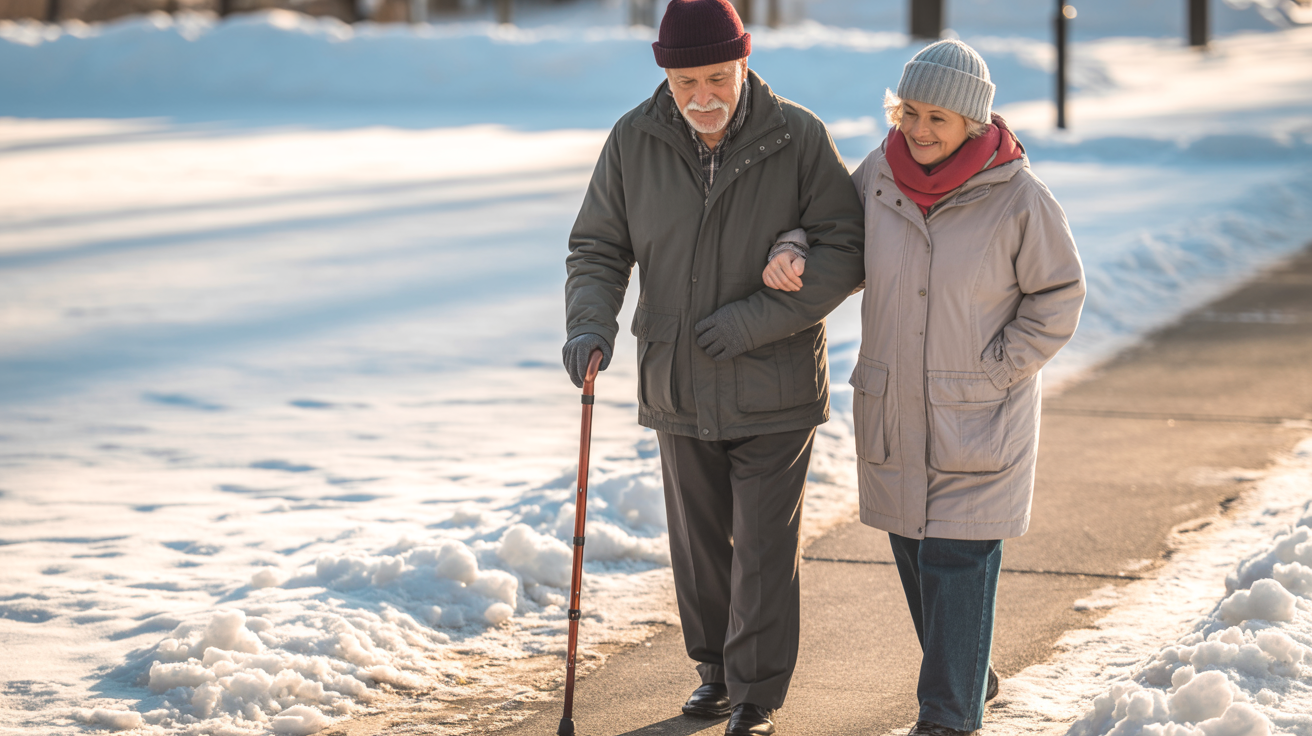
Senior fall prevention winter is critical, as icy conditions significantly increase injury risks. Falls are a leading cause of injuries and long-term health complications in older adults. Wear proper footwear with good traction—consider boots with non-slip soles or attachable ice grips. Clear walkways of snow and ice promptly, use salt or sand for traction, and install handrails on outdoor steps. Avoid unnecessary trips during icy conditions, and ask for help with snow removal rather than risking injury.
Recognizing and Preventing Hypothermia
Hypothermia prevention elderly requires vigilance, as seniors are at increased risk. Warning signs include pale or ashy skin, confusion, weakness, and problems walking. Notably, shivering may not be a reliable indicator in older adults. Maintain indoor temperatures at 68-70°F or warmer, dress in layers when going outside, and wear hats, gloves, and scarves. If you suspect hypothermia, seek medical attention immediately—it's a medical emergency.
Managing Seasonal Health Risks
Winter health risks seniors face extend beyond cold exposure. Viral illnesses like flu and COVID-19 pose serious threats to weakened immune systems. Stay up-to-date on vaccinations, practice good hand hygiene, and avoid crowded indoor spaces during peak illness seasons. Cold weather can also exacerbate chronic conditions like arthritis, heart disease, and COPD, requiring careful symptom monitoring and medication management.
Staying Active and Connected
Senior winter wellness includes maintaining physical activity and social connections despite weather challenges. Engage in indoor exercises like chair yoga, walking routines, or light strength training to maintain circulation and strength. Combat seasonal depression and isolation by prioritizing video calls with loved ones, participating in indoor community activities, and maximizing natural light exposure by sitting near sunny windows.
Emergency Preparedness
Prepare for potential power outages with emergency supplies including flashlights, batteries, blankets, non-perishable food, and charged phones. Keep medications accessible and maintain a list of emergency contacts. Cold weather safety elderly planning should include informing others of your whereabouts when traveling and having backup heating sources if possible.
All Seniors Foundation's Winter Support
All Seniors Foundation provides winter wellness checks, assistance with home winterization, and emergency response services to help seniors stay safe during challenging weather conditions, ensuring no one faces winter hazards alone.
The forecast for winter 2025, influenced by La Niña, suggests varied regional impacts with some areas experiencing colder, wetter conditions and increased snowfall. Elderly cold weather precautions tailored to local conditions are crucial. By implementing these safety strategies, seniors can enjoy winter months while minimizing health risks and maintaining independence.
Ready to Get Started with Home Health Care?
Schedule a free assessment with our expert care team. We'll help you understand your options and create a personalized care plan.
Or call us at (818) 581-4101